
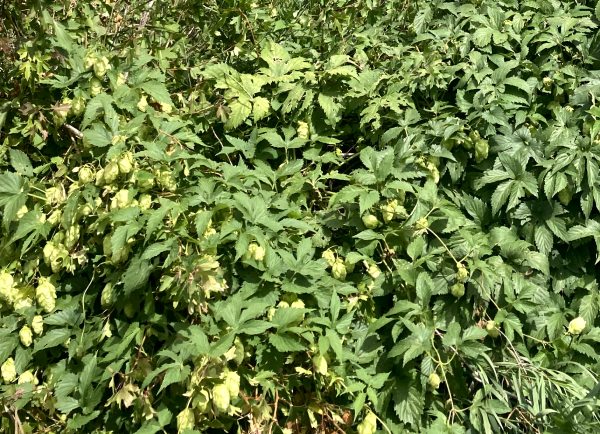
Hops are more than just a flavoring agent for beer; they are also packed with nutrients and bioactive compounds. They are a good source of vitamins such as vitamin C and B vitamins, particularly riboflavin and niacin. Hops also contain powerful antioxidants like flavonoids and polyphenols, which have anti-inflammatory properties.
The compounds found in hops, such as xanthohumol, have been studied for their potential health benefits, including their ability to reduce anxiety, promote better sleep, and even exhibit anti-cancer properties. The plant’s bitter acids, including humulone and lupulone, are also known for their antibacterial effects. Hops are in the hemp family.
Foraging Wild Hops in Wyoming
This post contains affiliate links.
Wild hops grow abundantly in various regions of Wyoming and throughout North America, particularly along riverbanks, in woodlands, and at the edges of fields. The flowers, or hop cones, are typically harvested in late summer to early fall, when they have a strong, aromatic scent and a slightly sticky feel due to the resin they produce. The leaves and stems have a rough texture that can cause rashes for some people.
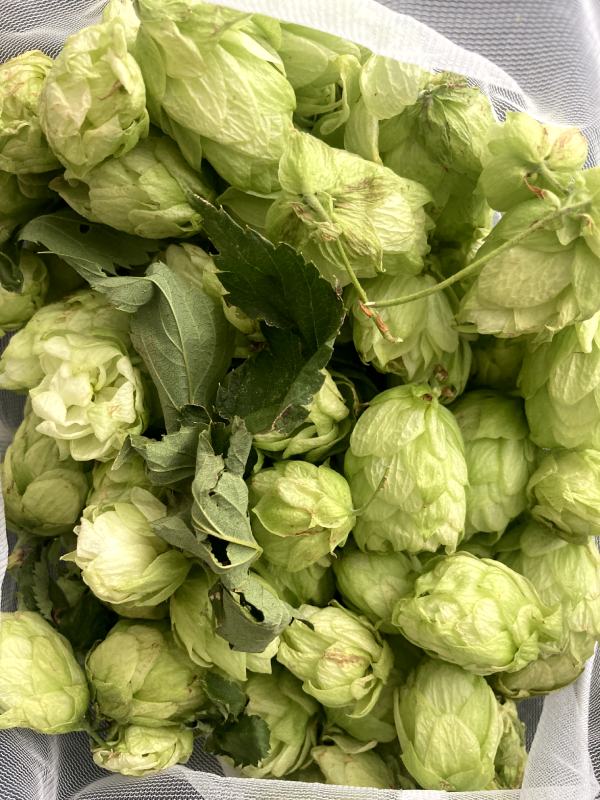
The hop cones should be greenish-yellow, and when squeezed, they should spring back to their original shape. Once harvested, they can be used fresh in tea or dried to infuse into oils or vinegar.
If you’re harvesting a small batch, hanging the hops cones in a window using a mesh produce bag can be a convenient way to dry them.
Place the dried hops in an airtight container, like a glass jar with a tight-sealing lid. For longer storage, consider keeping the container in the refrigerator or freezer. The cool temperature will help maintain the hops’ freshness for a more extended period, particularly if you plan to store them for several months.
How to Make Hops Tea
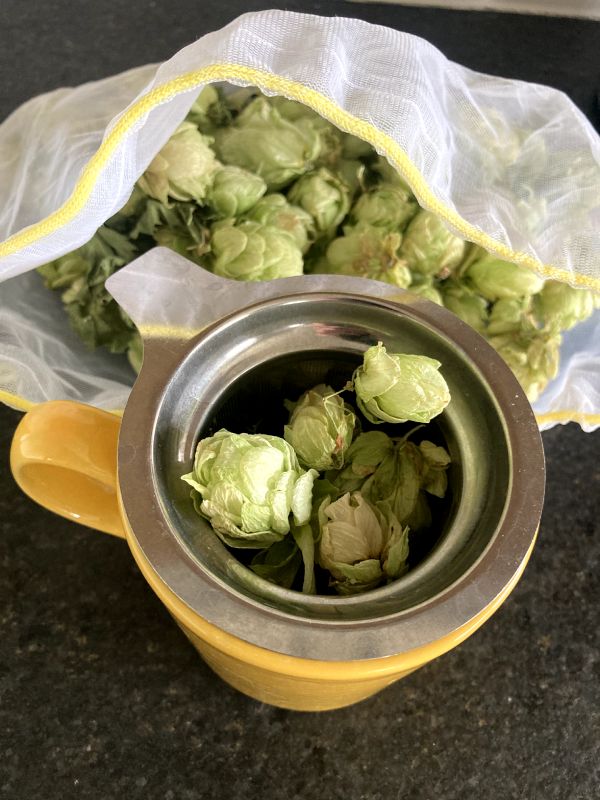
Making hops tea is simple. To prepare it, add around 5 fresh or dried hop cones to a tea strainer and steep it in a cup of hot water for about 10 minutes.
You can adjust the steeping time based on your taste preference, as longer steeping will result in a more bitter flavor. Sweeten it with honey to balance the bitterness. Hops tea is known for its calming effects, making it a great choice to unwind at the end of the day.
I’ve been keeping a large bottle of hops tea refrigerated to add to my daily cup of hot nettle tea.
Peterson Field Guide To Western Medicinal Plants And Herbs says historically, hops has been used to treat anxiety, restlessness, insomnia, pain, gas, intestinal cramping, and diarrhea. The field guide states that laboratory studies demonstrate muscle relaxing properties.
If you’re unable to forage hops, you could buy it ready for tea or use encapsulated hops as a calming aid.






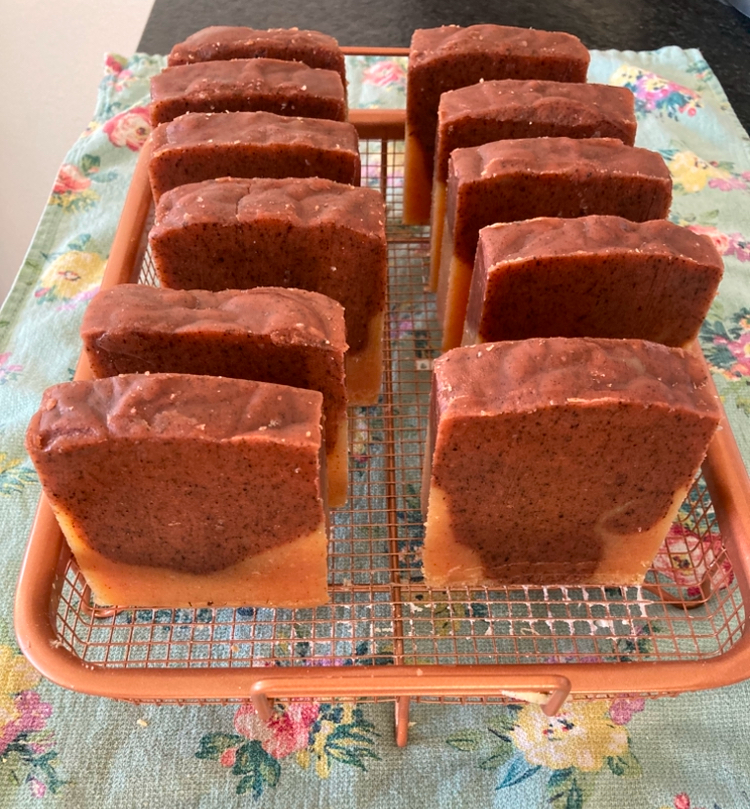
 Wyoming Prairie
Leave a comment