
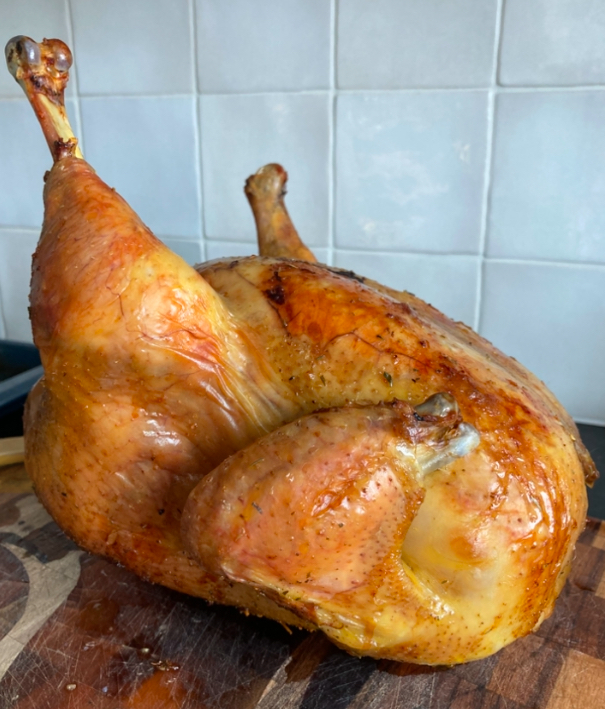

We were gifted 7 cornish-cross broiler chickens by a very kind friend in the neighborhood who has had unfortunate luck with his health. We had them for a few weeks waiting on the blistering cold wind to calm down. I thought that if they weren’t on high-protein feed, it wasn’t such a rush to butcher them at two months old. Lesson learned, we should have butchered them right away.
Cheap Way to Butcher Chickens
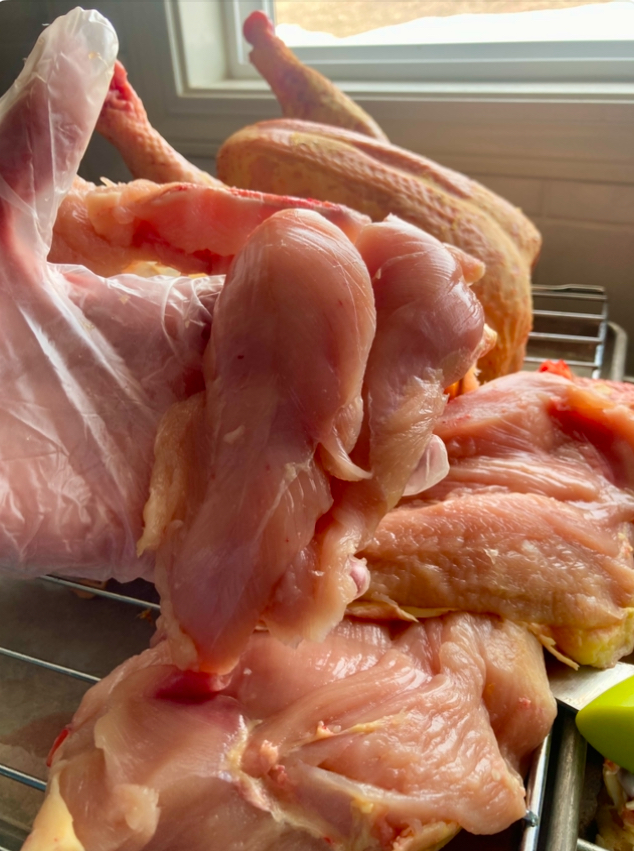
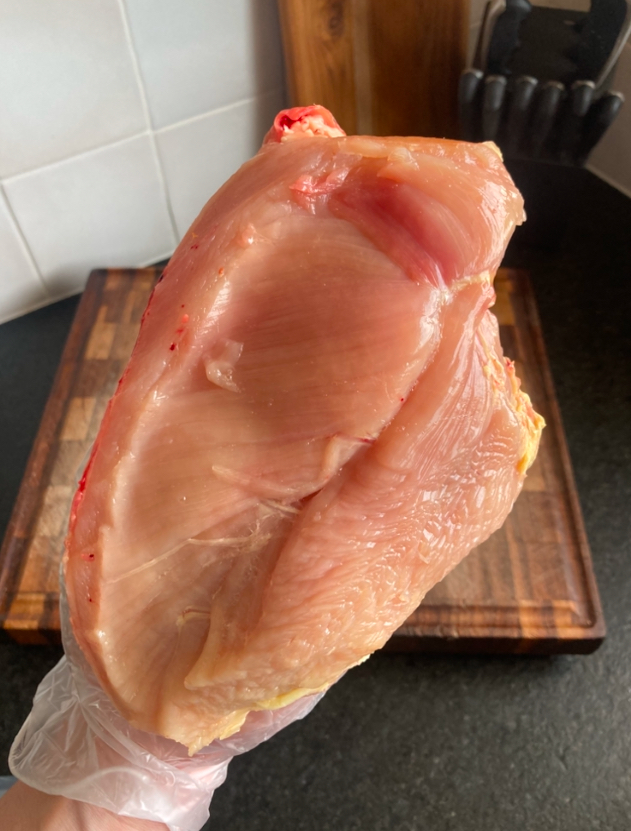
It didn’t make sense to spend money on butchering just 7 birds, so we used what we had. A feed bag with the corner cut out worked as replacement for a cone. I just held the bag over a bucket. Once the nerves relaxed, it could rest in the bucket.
Then the chicken went in a pot of 150 degree water for just under a minute. A canning pot worked well. When the skin can be pinched off of the feet, the feathers are ready to be easily plucked.
Green Muscle Disease
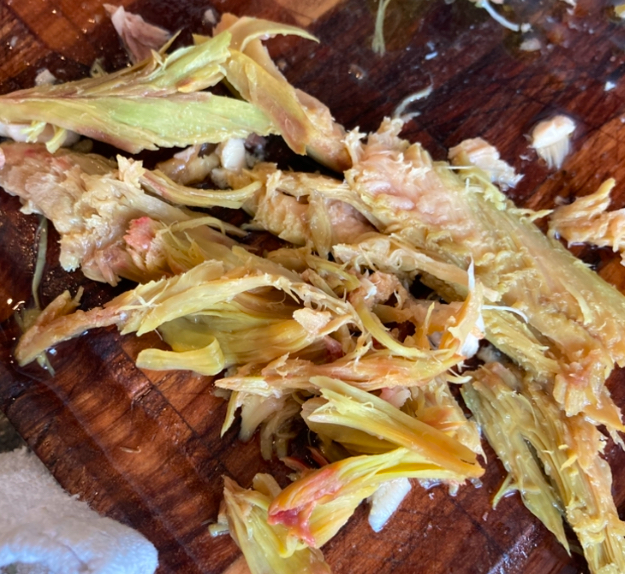
Unfortunately, it looks like at least one of these nearly 7 pound birds had a little Green Muscle Disease. From what I’ve read, Green Muscle Disease, also known as Deep Pectoral Myopathy, is a condition that affects broiler chickens, particularly fast-growing, heavy-breasted breeds. It results in degeneration and necrosis of the tenderloin due to inadequate blood supply. Over time, this muscle turns green, giving the condition its name.
Likelihood of Green Muscle Disease (Deep Pectoral Myopathy) in Broiler Chickens
| Risk Factor | Likelihood of Green Muscle Disease | Explanation |
|---|---|---|
| Fast-growing broiler breeds (e.g., Cornish Cross) | 🟥 High | Rapid muscle development increases risk of ischemia. |
| Heavy birds (5+ lbs live weight) | 🟥 High | Larger muscles require more blood flow, making them prone to restricted circulation. |
| Frequent wing flapping (stress, overcrowding, handling) | 🟥 High | Increased wing movement leads to excess strain on the deep pectoral muscle. |
| Sudden movements or disturbances | 🟧 Moderate | Can trigger excessive wing use, cutting off blood supply. |
| Transporting or catching birds for processing | 🟧 Moderate | Handling stress increases wing activity, worsening muscle pressure. |
| Gradual growth rate (well-managed diet) | 🟨 Low | Balanced nutrition helps prevent excessive muscle strain. |
| Smaller or slow-growing breeds (e.g., heritage chickens) | 🟩 Very Low | Less muscle mass reduces risk of ischemia. |
| Minimal handling and low-stress environment | 🟩 Very Low | Less wing flapping means lower risk of restricted blood flow. |
This condition does not affect the rest of the chicken. Chickens with Green Muscle Disease are safe to eat. We just removed the unsightly tenderloin. The dog won’t mind that it looks funny.
I have only cut into two of the chickens so far to know if the tenderloins were damaged. The first one we cooked was discolored but the second one I cut was fine so I left the rest of them whole for the freezer. (Update: 2 out of 7 chickens had discolored tenders)
If you’ve experienced Green Muscle Disease in chickens, leave a comment below. Thanks for reading.





 Wyoming Prairie
Leave a comment